
whatsapp Icon Image
Phone Icon Image

The 2026 Technical Guide to Drone-Based Wind Turbine Blade Inspection in India

In the rapidly evolving landscape of Indian renewable energy, Digital Studio provides the definitive standard for wind turbine blade inspection services in India. This 2026 technical guide explores how high-fidelity 100MP visual documentation and S1–S4 severity grading are transforming O&M (Operations & Maintenance) workflows across the subcontinent. From navigating DGCA compliance on the Digital Sky platform to managing the unique Leading Edge Erosion (LEE) challenges caused by the Indian monsoon, we provide the visual intelligence required for data-driven engineering decisions.

India-Specific Environmental Challenges for Wind Assets »

India’s diverse wind corridors—ranging from the coastal plains of Tamil Nadu to the arid deserts of Gujarat and Rajasthan—subject turbine blades to extreme stress. Coastal saline corrosion and high humidity in states like Maharashtra and Andhra Pradesh accelerate surface delamination. Conversely, desert-based farms face sand-particle abrasion, which creates a "sand-blasting" effect on the gel coat. A critical factor unique to the subcontinent is the Southwest Monsoon; the high-velocity droplet impact during this period is the primary driver of accelerated Leading Edge Erosion (LEE). Digital Studio recommends a dual-inspection cycle—pre-monsoon for baseline mapping and post-monsoon for damage assessment—to maintain peak AEP (Annual Energy Production).


The ROI of Predictive Blade Maintenance »

In 2026, shifting from reactive to predictive maintenance is the industry standard for reducing LCOE (Levelized Cost of Energy). Regular visual inspections identify S1-S2 minor defects—such as hairline surface cracks or coating pinholes—before they evolve into S3-S4 structural failures. By utilizing our S1-S4 Severity Classification, O&M managers can plan proactive repairs during low-wind seasons. For example, treating Category 2 erosion on the tip region is 80% more cost-effective than a full structural blade repair necessitated by a neglected lightning burn or trailing-edge split.


Modern Methodology for Wind Turbine Blade Inspection in the Indian Environment »

This video walkthrough details our specialized workflow for Indian wind farms, demonstrating how we combine 100MP data acquisition with the S-Scale triage system to identify structural decay in its earliest stages.

A visual guide to our end-to-end inspection workflow, featuring S-Scale triage standards and 100MP data acquisition for utility-scale wind farms.

UAV Inspection Technology: Visual Intelligence in the Digital Sky »

Digital Studio utilizes DGCA-compliant drone operations to deliver high-fidelity visual documentation. By deploying enterprise-grade UAVs equipped with 100MP sensors and 6K radiometric video, we capture sub-centimeter detail that manual rope-access inspections often miss. Our workflow is fully integrated with the Digital Sky platform, ensuring all industrial sorties are airspace-authorized. Beyond simple photography, we provide Visual Baselines that are Digital Twin-ready, allowing for precise 3D volumetric analysis of blade surface loss over time.

  • Operational Speed: A full 3-blade and nacelle survey is completed in under 45 minutes, minimizing turbine downtime.
  • 100MP Precision: High-resolution stills identify microscopic gel-coat pinholes and fiber-mat exposure that 4K drones cannot resolve.
  • Site Safety: Zero-risk operations; no personnel are required to work at height or enter the rotor-swept zone.
  • Actionable Data: Every deliverable is structured for immediate O&M decision-making, featuring GPS-tagged defect locations and severity grading.

Technical Depth & Field Deployment

This guide explains inspection methodology and asset management principles. For a focused breakdown of common wind turbine blade defects, severity grading (S1–S4), and repair prioritization strategy, read our Wind Turbine Blade Defects: Severity Classification & Inspection Guide ↗.

If you are planning execution across operational wind farms, visit our wind turbine blade drone inspection services page ↗ for structured deliverables and pan-India deployment capability.


Standardized Inspection Workflow & Methodology »

Digital Studio follows a rigorous industrial UAV workflow to ensure 100% data coverage. Our process begins with Pre-Flight Site Coordination, including local airspace clearance via the Digital Sky platform. During execution, we utilize a Span-Based Documentation technique—systematically capturing the blade from root to tip across all four surfaces (Leading Edge, Trailing Edge, Pressure Side, and Suction Side).

Our pilots maintain precise Horizontal and Vertical Offsets to ensure sub-centimeter GSD (Ground Sample Distance). Every sortie concludes with On-Site Field Verification, where we audit image overlap and exposure quality to guarantee that no critical defect is missed before the team demobilizes.

Standardized Visual Deliverables:

100MP Technical Stills
High-fidelity visual captures of every blade meter, systematically organized by turbine ID and span position for sub-centimeter defect analysis.
6K Cinematic & Radiometric Video
Precision drone fly-bys of the Hub Assembly, Yaw Bearings, and Nacelle Chassis, optimized for identifying oil leaks, mechanical wear, or cooling fan obstructions.
O&M Ready Folder Silos
A structured data architecture (Site - Turbine - Component) designed for seamless ingestion into enterprise Asset Management Systems (AMS).
Detailed Defect Register
A comprehensive technical log (CSV/Excel) featuring GPS-tagged defect locations, surface measurements, and S1-S4 Severity Ratings.
Executive Technical Summary
A high-level engineering report (PDF) summarizing overall fleet health and prioritizing "Action-Required" S3 and S4 critical defects.

Technical Reporting Samples »

Download our 2026 reporting templates to see how Digital Studio converts raw visual data into actionable O&M intelligence.


Strategic Inspection Scheduling for Indian Wind Corridors »

To maximize Annual Energy Production (AEP) and mitigate operational risk, Digital Studio recommends the following visual documentation milestones for Indian wind assets:
Commissioning Baseline (Pre-COD)
Documenting the 'As-Built' condition of blades to identify manufacturing defects, transport stress, or installation damage before the Commercial Operation Date (COD). This establishes the primary baseline for all future warranty and insurance claims.
Routine O&M Cycle (12–24 Months)
Periodic visual monitoring performed during low-wind seasons to track the progression of Leading Edge Erosion (LEE) and surface integrity, ensuring the aerodynamic profile remains optimized for peak performance.
Post-Monsoon / Post-Cyclone Assessment
Critical for wind farms in high-risk corridors like Gujarat, Odisha, and Tamil Nadu. We prioritize identifying lightning damage, structural punctures, or delamination immediately after extreme weather events to prevent water ingress into the blade core.
End-of-Warranty (EOW) Audit
A high-precision 100MP technical audit performed 6–12 months before the OEM warranty expires. This documentation is essential for flagging latent defects and providing the "Visual Intelligence" required for warranty-backed repair negotiations.

Examples of Blade Defects (Drone Images) »

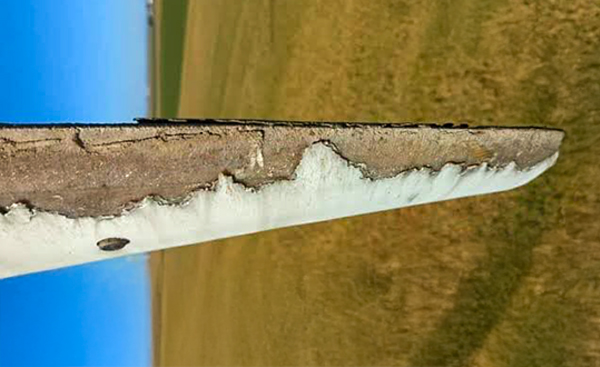
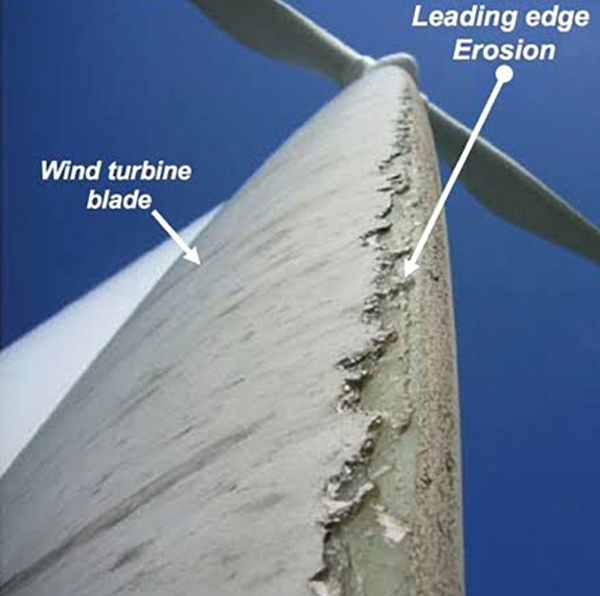
Wind turbine blade leading-edge damage from erosion
Leading-edge erosion damage (examined during inspection)
Close-up of leading-edge erosion on a wind turbine blade
Severe leading-edge erosion (caused by rain and particulates)
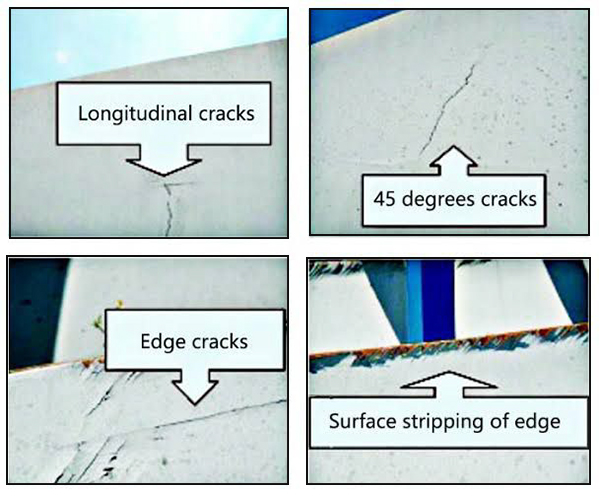
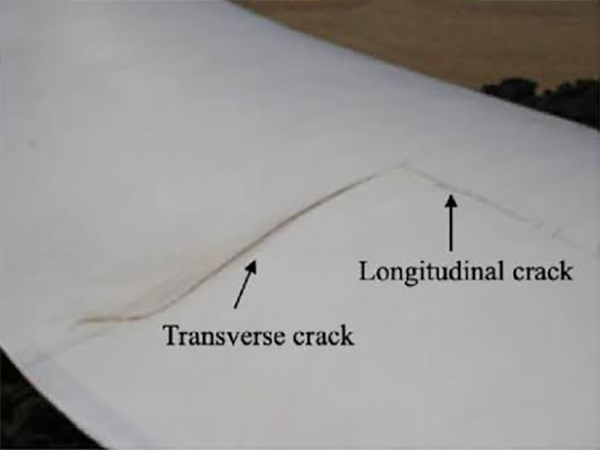
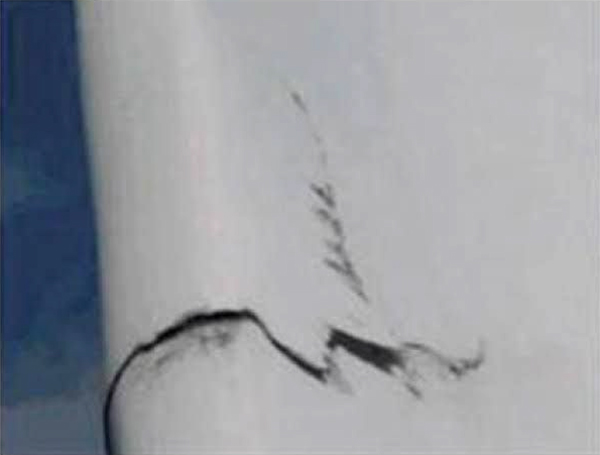
Wind turbine blade surface defects and cracks
Surface-level cracks and defects across blades
Wind turbine blade crack detected by drone inspection
Cracks on blade surface captured via drone
Wind turbine blade erosion along profile
Erosion along the blade profile

Frequently Asked Questions »

How often should wind turbine blades be inspected?
Typically, blades get a baseline inspection at commissioning, then routine checks every 12–24 months. Additional inspections are recommended after major events (lightning strikes, cyclones, bird strikes) or as the turbine ages.
Do turbines need to be shut down during inspection?
Yes. For safe and accurate close-range imaging, turbines are usually stopped so the blades are stationary during drone flights.
What deliverables will I receive?
A typical package includes high-resolution blade photos, 4K/6K video of each blade, turbine-wise folders, and a defect register (Excel/PDF). An executive summary of findings is often included.
Can inspections support warranty claims?
Yes. Objective, date-stamped documentation of blade condition can aid OEM warranty discussions, insurance claims, and maintenance planning.
Are drone inspections available throughout India?
Yes. We offer blade inspection services across major wind corridors in India (e.g. Tamil Nadu, Maharashtra, Gujarat, Karnataka, Rajasthan), subject to site permissions and weather conditions.

Schedule Your Blade Inspection »

Ready to optimize your wind farm’s performance? Contact our inspection experts to plan a survey of your turbines.

Call +91 98205 78189 Request Proposal WhatsApp Now

Last updated:

WhatsApp Now!