Wind Turbine Blade Inspection India | 100MP Drone Surveys
Wind turbine blade inspection services across India - We use high-resolution drone imaging to document blade defects, assess structural condition, and support maintenance decisions for wind farm operators and OEM teams.
Professional Drone-Based Wind Turbine Blade Inspection (Pan-India) »
Digital Studio (estd. 2008) provides wind turbine blades inspection in a structured manner, high-resolution wind turbine blade inspection services across India. Our UAV-based workflow is designed for modern wind asset management — delivering inspection-ready documentation that supports maintenance planning, OEM review, warranty evaluation and lifecycle decisions.
We work with wind farm operators, IPPs, O&M providers, EPC contractors, OEM teams, consultants and insurance risk assessors.
Let's Discuss Your Project
Looking for professional services? Connect with our team to discuss your project requirements.
6K drone video documentation of wind turbine blade inspection for renewable energy infrastructure.
This drone inspection video documents the condition assessment of utility-scale wind turbine blades. The shoot was executed using high-resolution aerial imaging to capture surface defects, erosion marks, and structural irregularities across the blade span.
Industry: Renewable Energy
Equipment used: DJI Mavic 4 Pro
Application: Wind turbine blade and nacelle inspection
Drone Inspection Is the Industry Standard in 2026 »
Drone-based wind turbine blade inspection is no longer an alternative method — it is the baseline documentation standard across utility-scale wind portfolios.
High-resolution close-range blade imaging
Repeatable zone-based inspection coverage
Rapid multi-turbine deployment
Digitally structured reporting
Integration with asset management systems
This approach improves visibility into blade health while maintaining operational efficiency.
What Is Wind Turbine Blade Inspection?
Wind turbine blade inspection is the structured visual assessment of blade surfaces to identify visible deterioration and structural indicators such as:
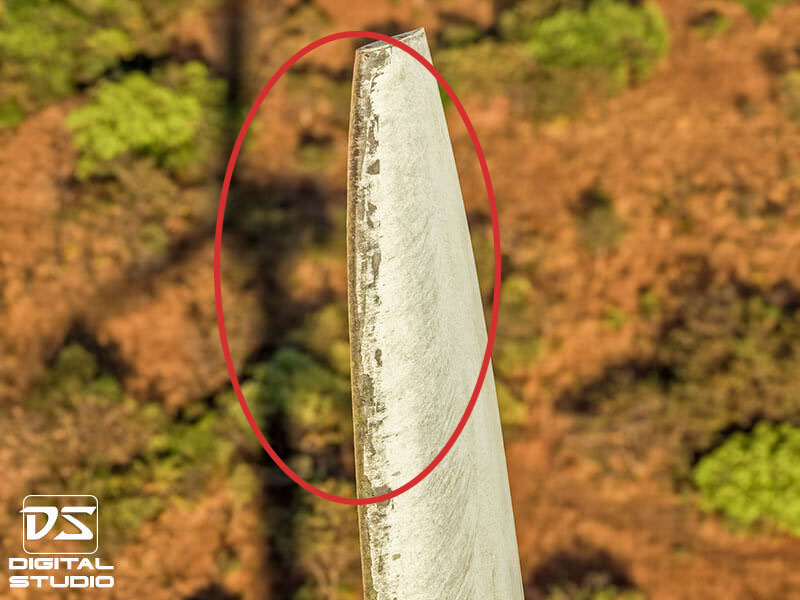
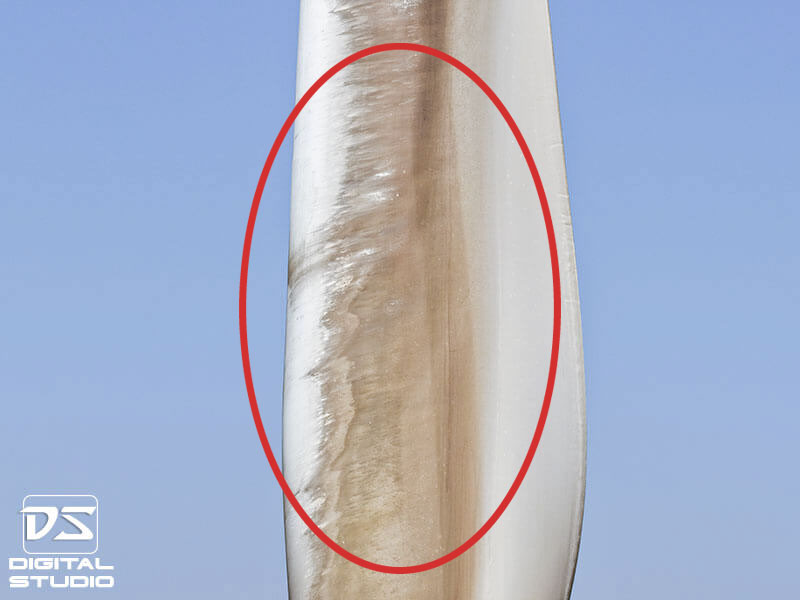
Leading-edge erosion
Surface cracks
Lightning strike damage
Gelcoat and coating degradation
Trailing-edge splits
Impact damage
Bond-line irregularities (visible indicators)
The objective is early defect detection, condition documentation and maintenance prioritisation before performance or safety is compromised.
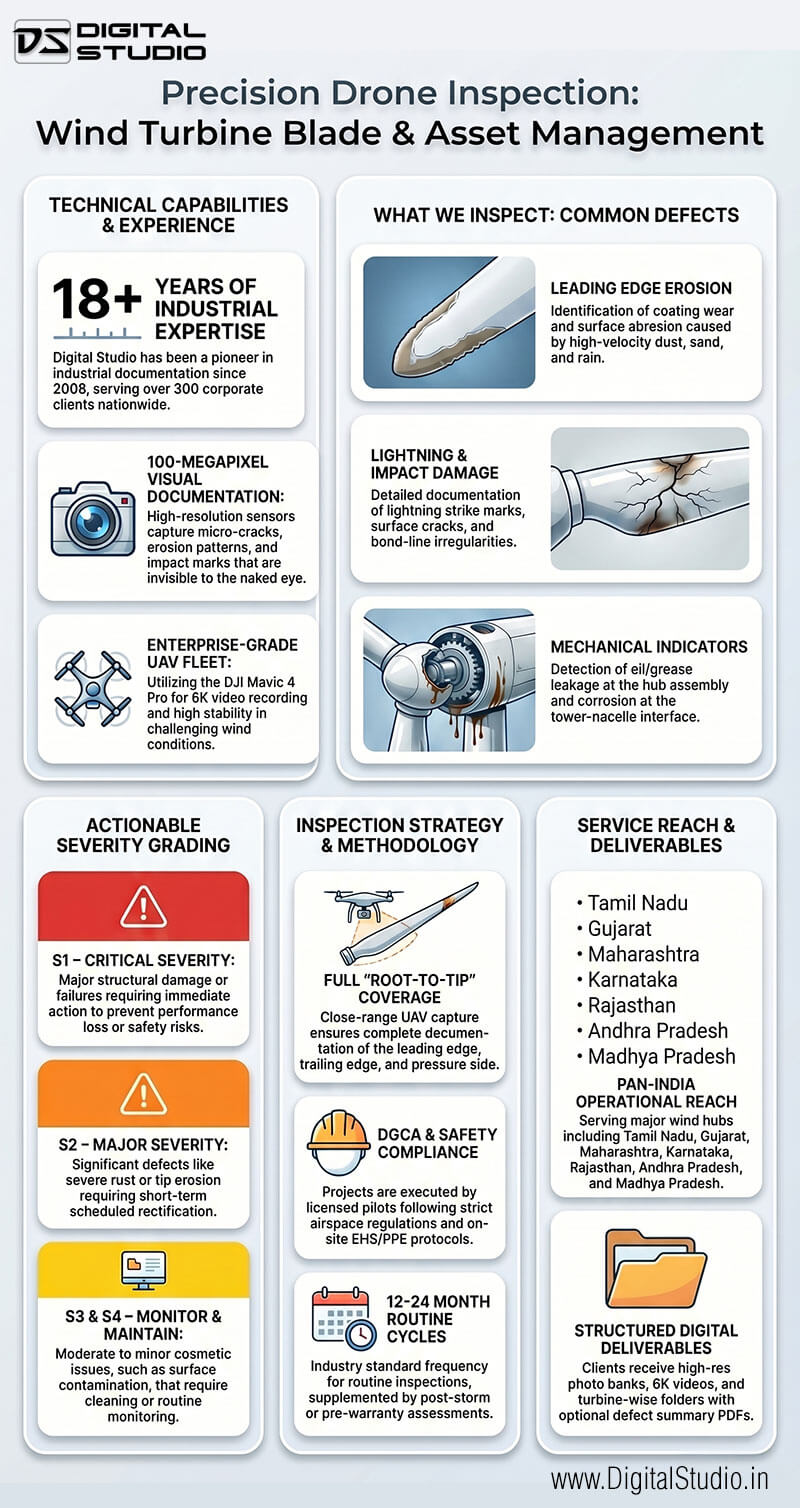
Using ultra-high-resolution 100MP sensors and the S-Scale triage system, we provide engineering-grade evidence to identify structural decay long before it leads to catastrophic failure. Watch the video below to see our 100MP vs. regular drone comparison.
Professional 100MP drone survey identifying Leading Edge Erosion (LEE) and structural decay for predictive wind farm maintenance.
Inspection Equipment: DJI Mavic 4 Pro (Enterprise-Grade Capture) »
We deploy the DJI Mavic 4 Pro for wind turbine blade inspection projects, enabling ultra-high-resolution visual documentation with operational efficiency.
100-Megapixel Imaging: Captures fine surface details including micro-cracks, erosion patterns, coating defects, and impact marks.
6K Video Recording: Smooth inspection passes for review by maintenance and engineering teams.
Advanced Zoom Capability: Enables close-range defect documentation without physical contact.
High Stability in Wind Conditions: Designed for controlled flight around tall turbine structures.
Schedule Wind Turbine Blade Inspection »
Contact us to discuss turbine count, site locations and inspection objectives.
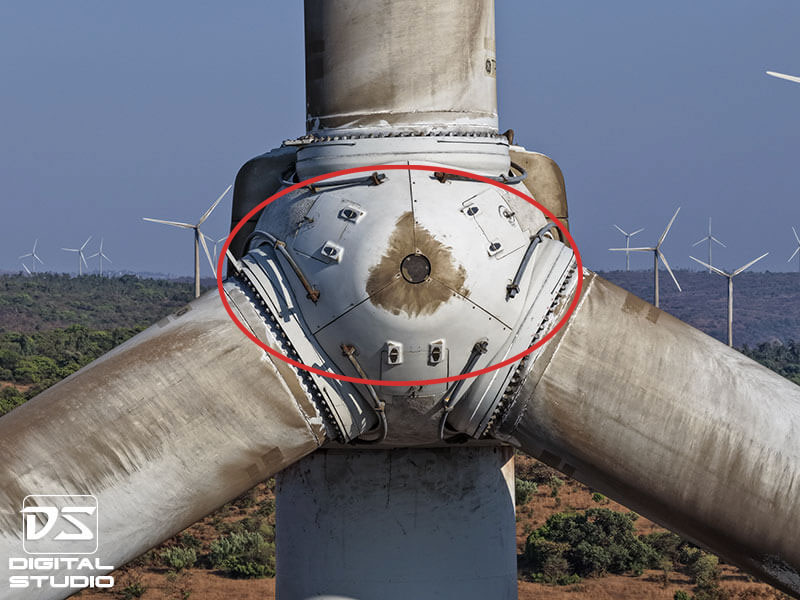
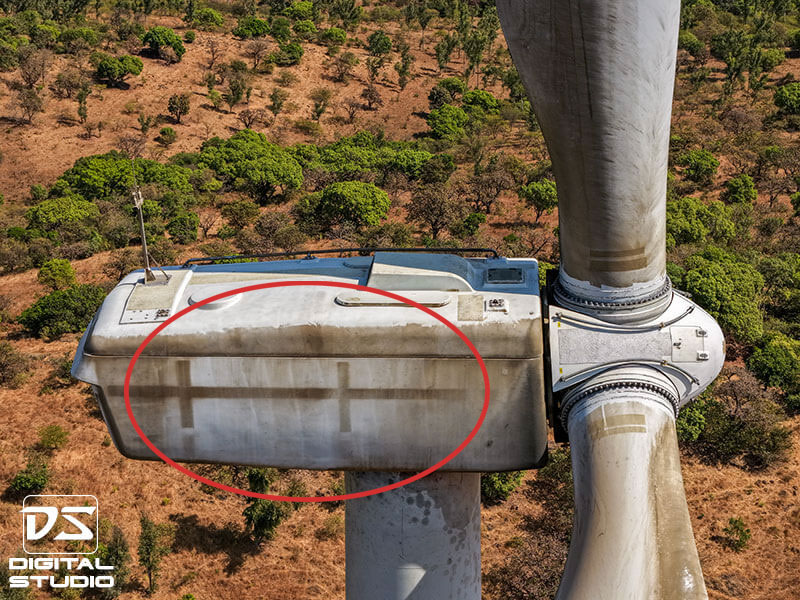
Heavy contamination on nacelle surfaces can lead to surface coating degradation over time and may indicate lubricant vapor or environmental accumulation, requiring cleaning and inspection during routine maintenance.
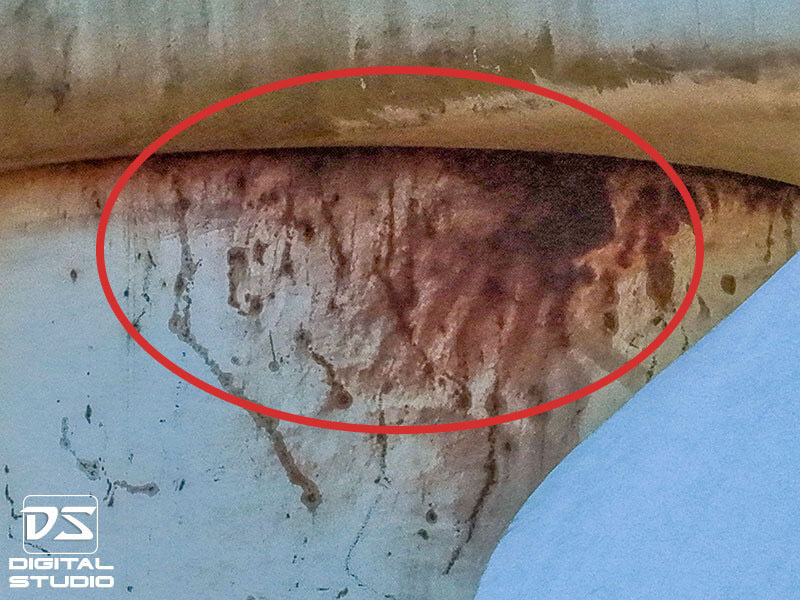
Corrosion staining and rust streaking visible at the tower–nacelle transition area of the wind turbine.
Severe rust streaking and corrosion runoff visible at the tower–nacelle transition section.
Dark reddish-brown streaks indicate corrosion originating from internal metal components, fasteners, or yaw bearing structural elements.
Rust stains flowing downward suggest moisture ingress and oxidation of metallic parts inside the nacelle interface area.
Accumulated corrosion residue along panel seams indicates long-term exposure without cleaning or protective coating maintenance.
Severity Classification:
S2 – Major (Requires Scheduled Inspection & Maintenance)
Corrosion at the tower–nacelle interface may indicate deterioration of structural fasteners, yaw bearing components, or protective coatings, requiring inspection during maintenance.
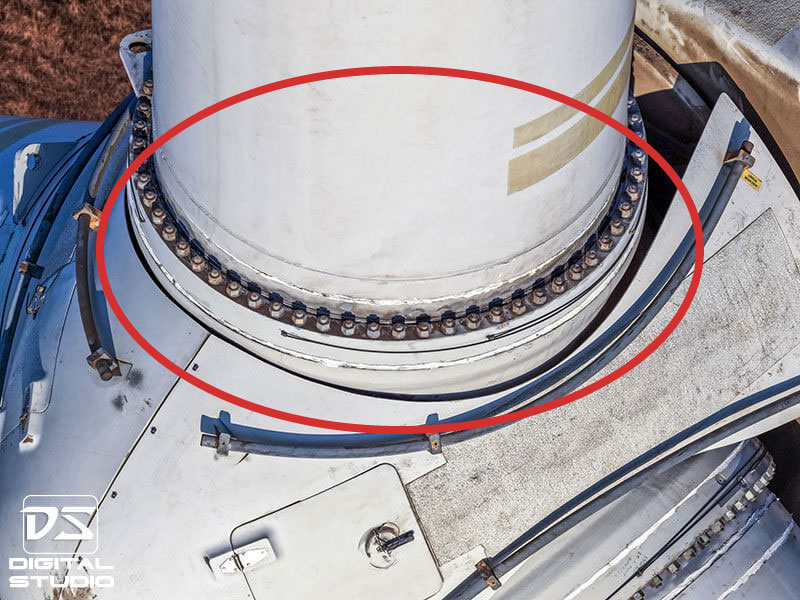
Corrosion visible on yaw bearing bolts and washers at the tower–nacelle interface of the wind turbine.
Defect Identification
Location: Tower–Nacelle Interface – Yaw Bearing Bolt Ring
Observed Defects:
Surface corrosion visible on multiple yaw bearing bolts and washers around the tower–nacelle interface.
Light rust formation on bolt heads indicates oxidation due to moisture exposure and environmental conditions.
Accumulated dirt and lubricant residue present along the yaw bearing flange and surrounding structural ring.
Surface contamination also visible on nearby nacelle panels, indicating long-term environmental exposure.
No missing bolts or structural deformation visible in this frame.
Severity Classification:
S2 – Major (Requires Scheduled Inspection & Maintenance)
Corrosion on yaw bearing fasteners can progress over time and may affect bolt integrity, preload conditions, and structural stability if left unaddressed.
Complete Blade Coverage – Inspection Panorama »
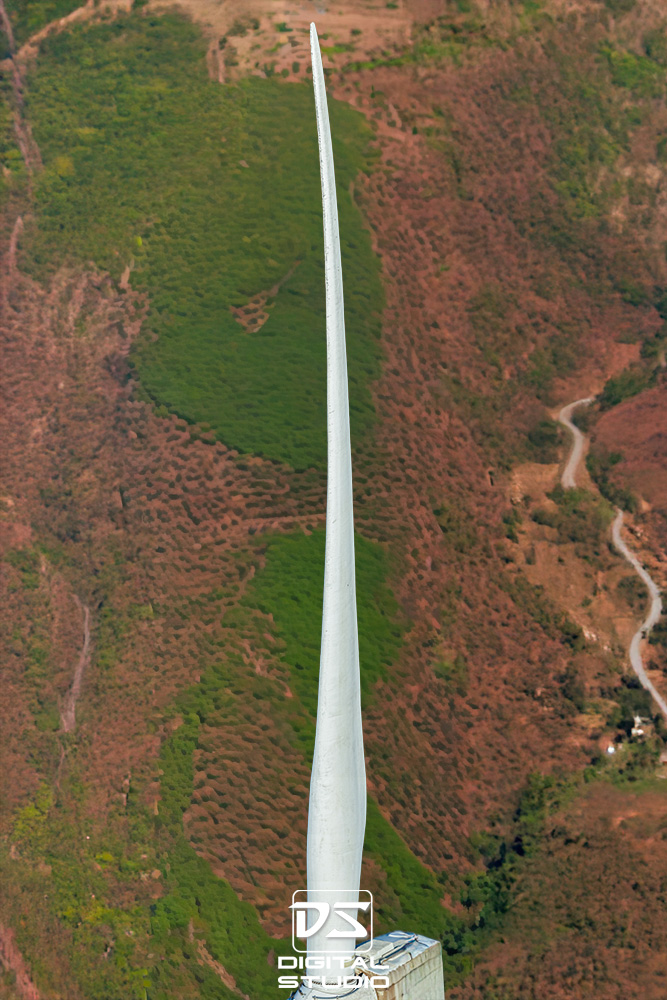
Each turbine blade was documented from root to tip using high-resolution drone imagery. The stitched panoramas below provide a full visual record of the blade surface for inspection, defect detection, and maintenance planning.
Blade A
ROOT | MID SPAN | OUTER SPAN | TIP
Inspection Coverage – Full Blade Length
Blade B
ROOT | MID SPAN | OUTER SPAN | TIP
Inspection Coverage – Full Blade Length
Blade C
ROOT | MID SPAN | OUTER SPAN | TIP
Inspection Coverage – Full Blade Length
Deliverables & Reporting »
High-resolution blade photographs (up to 100MP)
6K inspection videos
Turbine-wise structured folders
Defects summary PDF (Optional)
Frequently Asked Questions »
Do turbines need to be shut down during inspection?
Yes, blades must be stationary for safe and accurate close-range documentation.
Can inspection data support warranty discussions?
High-resolution structured documentation assists OEM and engineering review workflows.
Is thermal imaging included?
Thermal inspection can be included based on scope and environmental suitability.
Is the service available across India?
Yes. We execute wind turbine blade inspection services across major wind corridors including Tamil Nadu, Gujarat, Maharashtra, Karnataka, Rajasthan, Andhra Pradesh and Madhya Pradesh.
Section 1: Defect Severity & Reporting (The S-Scale)
S1 (Cosmetic/Minor)
Surface-level defects such as paint peeling or minor discoloration. No structural risk. Digital Studio Note: Our 100MP imagery distinguishes between surface dirt and true S1 pinholes.
S2 (Moderate)
Initial signs of erosion or small cracks in the gel coat. Requires monitoring but not immediate repair.
S3 (Major)
Structural exposure, such as fiber-mat visibility or deep leading-edge erosion. Requires scheduled maintenance to prevent core damage.
S4 (Catastrophic/Critical)
Serious structural failure, deep lightning strikes, or trailing edge splits. Immediate "Stop-Operation" recommendation. Digital Studio Note: We provide 6K video "fly-bys" of S4 defects to help engineers plan the repair rig logistics.
Section 2: Technical Damage Entities
Leading Edge Erosion (LEE)
The gradual wearing away of the blade's forward-facing edge due to rain, dust, and insects. Digital Studio Edge: We provide specific 'Tip-to-Root' documentation to track LEE progression over time.
Delamination
The separation of the composite layers of the blade. Often invisible to low-res drones, but visible under our high-fidelity 100MP photography.
LPS Burn Marks
Visual evidence of a lightning strike on the Lightning Protection System. While sensors check continuity, our visuals identify the exact exit/entry point of the strike.
Gel-Coat Cracking
Small "spider-web" cracks on the surface. We document these to determine if they are superficial or signs of internal stress.
Section 3: Visual Intelligence & Methodology
Visual Baseline
A comprehensive "birth-to-death" photographic record of a blade. Used to compare current damage against historical data.
100-Megapixel High-Fidelity Capture
The gold standard for visual documentation, allowing engineers to zoom in 400% on a defect without losing grain or detail.
6K Dynamic Workflow
Using high-resolution video to capture the "yaw" and "pitch" of the nacelle and hub assembly in motion for mechanical inspection.
Decision-Ready Data
Information that is clear enough for an O&M manager to make a repair budget decision immediately without needing a second site visit.
Section 4: The "Bridges" (Connecting to Industry Standards)
NDT-Ready Documentation
High-resolution visual data that serves as the "Primary Truth" before deploying expensive Non-Destructive Testing (NDT) like Ultrasonic or Eddy Current sensors.
Digital Twin Texturing
Providing the ultra-high-resolution "skins" for 3D Digital Twin models of wind farms.
DGCA Compliance (India)
Adherence to the Directorate General of Civil Aviation rules for drone flight in India. Digital Studio Note: All our operators are licensed for industrial-close-proximity flight.
BVLOS Compatibility
Ensuring our data formats (GeoTIFFs and high-res stills) are compatible with Beyond Visual Line of Sight data-management pipelines.
Beyond Wind Energy: Our technical documentation expertise extends to
Pharma Plant Photography
and specialized
Industrial Videography
for large-scale manufacturing facilities across India.
About the Specialist
Pashminu Mansukhani is a National Award-winning industrial photographer and corporate film director with over 20 years of experience in high-fidelity documentation. As the CEO and founder of Digital Studio, he holds a post-graduate degree in Computer Science, which allows him to bridge the gap between creative visual art and technical engineering requirements. His work in wind turbine blade inspection and pharma plant documentation is recognized for its "Visual Intelligence"—providing actionable data for O&M managers and engineering teams across India.