
whatsapp Icon Image
Phone Icon Image

360 degree Videography Services in Mumbai & India »

360 degree video production for industrial, corporate, pharma and infrastructure environments, enabling immersive walkthroughs of factories, facilities, and operational spaces for training, marketing, and documentation.

What Is 360 Degree Videography?

360-degree videography is a format that records the entire scene in all directions at once, allowing viewers to look around interactively during playback on phones, desktops, VR headsets, and compatible platforms.


When 360° Videography Is Required »

360° video is typically commissioned when audiences need self-directed viewing, spatial understanding, or immersive context that traditional video cannot provide.

  • Virtual tours for factories, facilities, showrooms, campuses, hotels, and public spaces.
  • Training and SOP communication where viewers need to observe environment, equipment placement, and safety zones.
  • Real-estate and interior walkthroughs where space perception impacts decision-making.
  • Events and experiential content where presence and atmosphere drive engagement.
  • Product and capability showcases where immersive viewing increases time-on-page and viewer attention.

How 360° Videography Improves Industrial and Corporate Visual Communication »

Infographic explaining the benefits of 360 degree videography for industrial sites, corporate environments, virtual tours, safety training, real estate walkthroughs, and infrastructure documentation.
360° videography allows viewers to explore industrial and corporate environments interactively, improving spatial understanding, remote site reviews, safety training, virtual tours, and infrastructure documentation.

Why 360° Videography Is Used »

360° video gives viewers control over what they explore, which improves spatial understanding, increases engagement, and reduces ambiguity compared to fixed-frame video.

  • To deliver immersive context by showing the complete environment, not a cropped frame.
  • To improve viewer engagement through interactive exploration.
  • To explain spatial relationships across rooms, floors, zones, or large facilities.
  • To enhance training and compliance learning with realistic, environment-based viewing.
  • To differentiate digital marketing with a format that feels “first-person” and memorable.

How 360° Video Works from Capture to Viewer Experience »

Capture (360 Camera) → Stitching & Stabilisation → Editing & Branding → Hosting & Playback (Web/YouTube/VR) → Viewer Navigation & Engagement → Business Outcome (Leads/Training/Trust)
    
A practical lifecycle for 360-degree videography, showing how capture and post-production translate into interactive viewing and measurable business outcomes.

360° Videography Across the Content Lifecycle »

360° videography follows a defined lifecycle where each stage affects visual clarity, viewer navigation, platform compatibility, and the final user experience.

  1. Capture and Location Planning: The shoot is planned around what viewers need to explore, including camera placement, movement paths, lighting conditions, and safety or access constraints.
  2. Stitching and Stabilisation: Multiple camera lenses are stitched into a seamless spherical video and stabilised to ensure comfortable viewing and natural navigation.
  3. Editing, Branding, and Messaging: The 360° footage is edited for pacing, clarity, and story intent, with optional branding elements, titles, and guided cues to direct attention.
  4. Platform Preparation and Compatibility: Video outputs are formatted for web, YouTube 360, VR playback, and device constraints to ensure smooth streaming and correct interactive controls.
  5. Viewer Navigation and Engagement: Viewers explore the scene interactively, which increases time-on-page and spatial understanding when the content is structured correctly.
  6. Business Outcome and Use Cases: The final 360° deliverable supports outcomes such as virtual tours, training, audits, marketing differentiation, and stakeholder communication.

Together, the 360° workflow overview and the lifecycle stages above explain how immersive capture and post-production choices directly affect viewer experience, platform performance, and the final purpose of the 360° video.


360 Videography: Captivating Experiences for Your Audience »

360° videography captures an environment in every direction, so the viewer can look around freely on YouTube, a website embed, or a VR headset. We use it for factory walkthroughs, facility overviews, installation documentation, and internal training—when a single camera angle cannot show scale, layout, and context.

What We Deliver in a 360° Video Project »

  • Stitched 360° master video (platform-ready for YouTube / web players)
  • Reframed 16:9 edits for standard screens (presentations, LinkedIn, website sections)
  • Poster frames / thumbnails for publishing
  • Basic guidance for publishing, embedding, and playback testing

Alongside 360° video, we offer interactive 360 photography↗ for use cases such as virtual walkthroughs, spatial documentation, and remote viewing across real estate, commercial, and industrial environments.

For projects that require more than immersive capture, our industrial video production↗ services cover the complete workflow—from planning and on-site shooting to post-production and final delivery.


360° Video Production: How It Works in Real Deployments

360° video gives viewers the freedom to look around a location, facility, event, or industrial environment from every direction. In real-world deployments, the viewer can control the viewing angle on YouTube, websites, mobile devices, VR headsets, and interactive presentation platforms. For professional results, accurate camera placement, clean stitching, smooth stabilization, and proper export settings are essential. These technical steps ensure that the final 360° video feels natural, immersive, and easy to navigate.


Behind the Scenes of a Professional 360° Video Shoot

Behind-the-scenes footage from an on-site 360° video production setup, showing camera placement, location positioning, equipment checks, lighting awareness, and workflow preparation before recording. This process helps ensure clean stitching, stable footage, accurate spatial coverage, and a smoother immersive viewing experience across websites, YouTube, mobile devices, and VR platforms.


Aerial 360° Videography for Large Sites & Open Environments »

This approach combines aerial movement with 360° capture to document large outdoor sites, campuses, and infrastructure where ground-based viewpoints are insufficient.


360° video production in Mumbai & Navi Mumbai is commonly used for documenting facilities, campuses, and large sites where multiple viewpoints are required. These projects typically involve a mix of aerial and ground-based capture, depending on access, safety constraints, and the intended viewing platform.


Behind the Scenes »

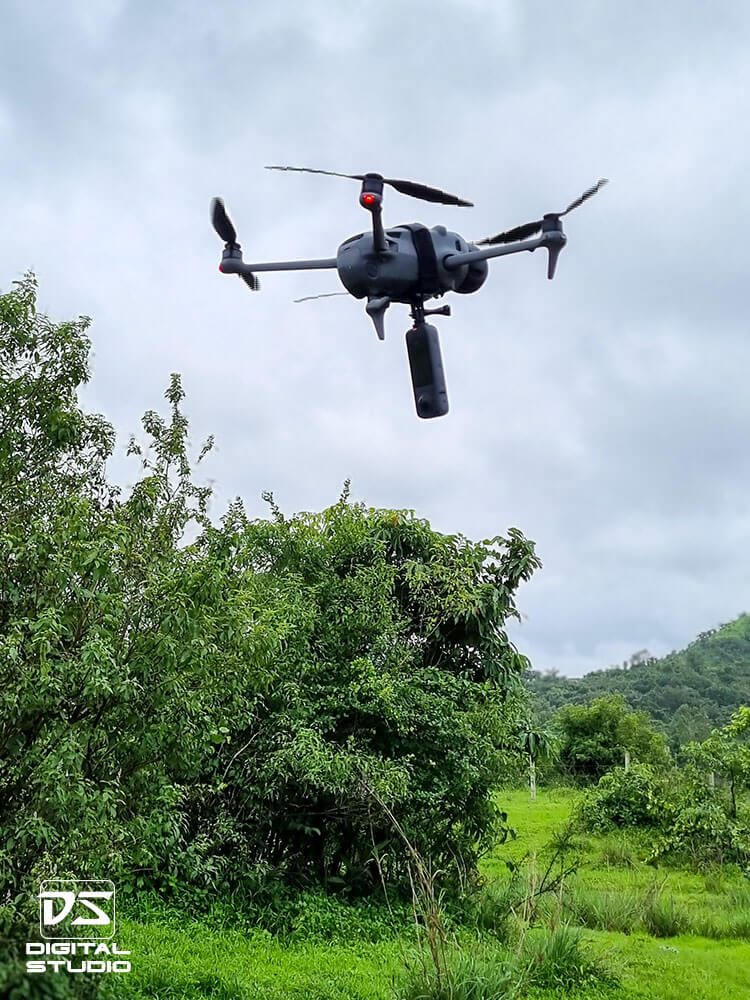
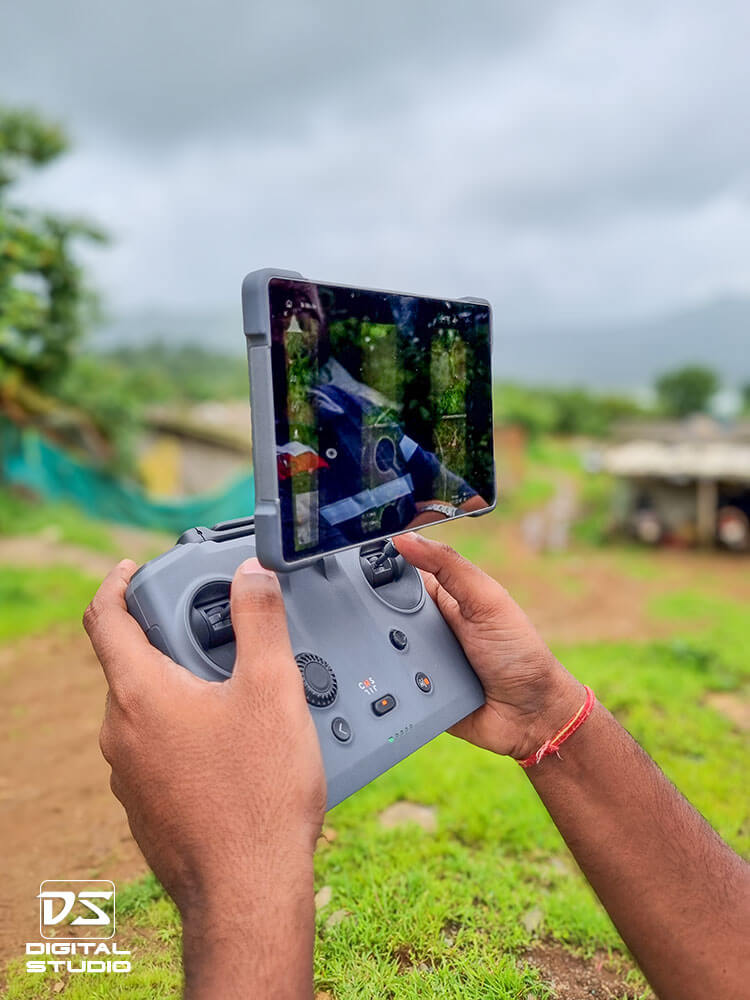
The following behind-the-scenes frames document the setup and aerial capture workflow used for 360° videography over an open outdoor environment near Pawna Lake. The focus is on launch procedures, in-flight operation, and monitoring during aerial 360° recording.
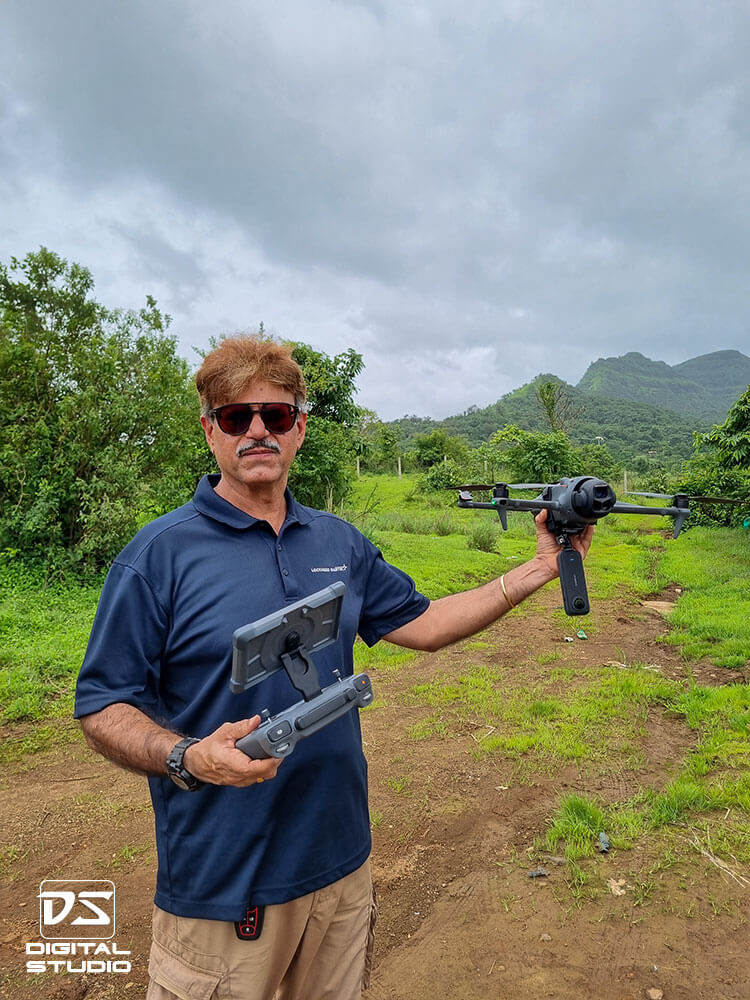
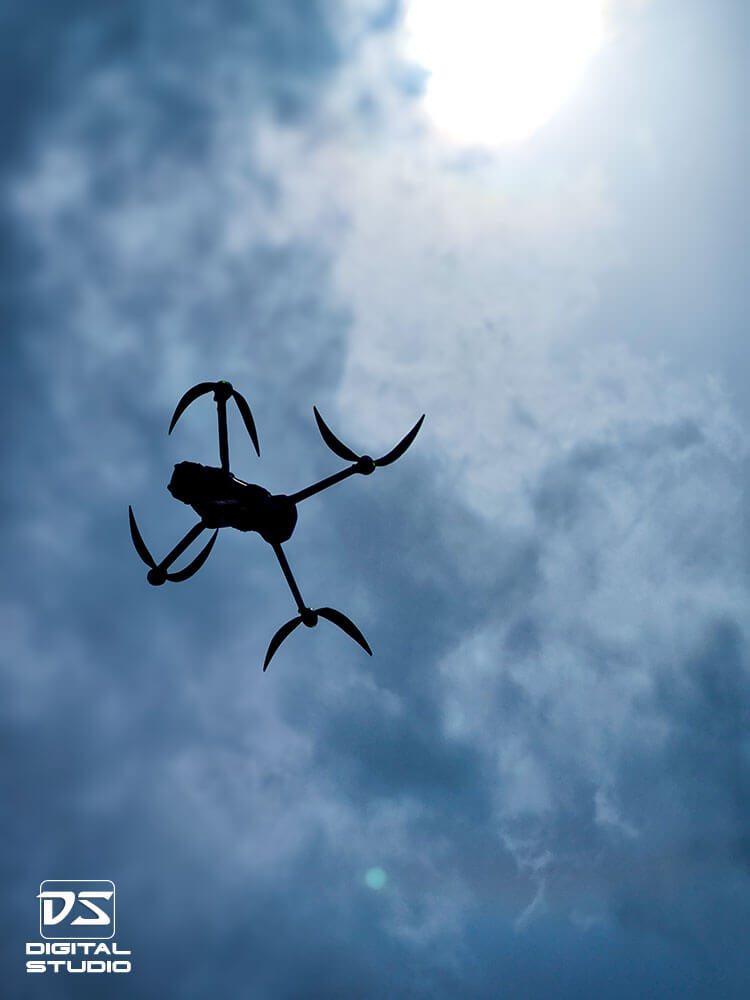
Pre-flight launch of DJI Mavic 4 Pro with Insta360 X5 mounted for aerial 360-degree videography
Pre-flight launch setup for aerial 360° video capture
DJI Mavic 4 Pro in flight during aerial 360-degree videography over an open landscape
Drone in flight during aerial 360° recording

DJI Mavic 4 Pro fitted with Insta360 X5 camera for aerial 360-degree videography
360° camera mounting configuration used for aerial capture
Remote controller used to monitor DJI Mavic 4 Pro during aerial 360-degree videography
Remote monitoring and flight control during capture

Selected 360° Video Project Examples »

The following videos represent recent 360° videography projects captured in real environments. Each example differs by location, audience, and delivery format, depending on how the content is intended to be viewed.


360° Video for Presentations & Internal Communication »

This format is often used for meetings, reviews, and internal communication where spatial context is required but physical site visits are not possible.


Specialised 360° Capture Approaches »

In some scenarios, 360° videography is combined with alternative capture methods to document larger sites or outdoor environments.


Interactive 360° Virtual Tour Examples »

These examples demonstrate interactive 360° photography used for walkthroughs and spatial documentation across different environments.

Industrial Unit


Retail & Showroom Space


Outdoor & Public Spaces


Coastal & Open Environments


Interior & Fitness Spaces


Gallery & Exhibition Spaces


Additional 360° Video Samples »


When 360° Videography Makes Sense »

360° videography is most effective when spatial context matters more than controlled framing. Instead of guiding the viewer through a fixed sequence of shots, it allows them to explore an environment freely and understand layout, scale, and relationships between elements.

  • Facility walkthroughs and documentation: Viewers can inspect spaces, equipment placement, and movement paths without multiple camera angles.
  • Training and internal communication: Teams can familiarise themselves with locations and processes remotely, reducing the need for repeated site visits.
  • Large or complex environments: Factory floors, campuses, outdoor sites, and infrastructure benefit from a single capture that preserves full context.
  • Remote review and presentations: Stakeholders can explore environments at their own pace during meetings, reviews, or planning discussions.

360° videos are typically delivered in formats compatible with web players, presentations, and VR headsets. In many projects, reframed edits or supporting visuals are also provided where guided viewing is required.

This format is not intended to replace traditional video in every scenario. Instead, it is used selectively where accuracy, orientation, and viewer-controlled exploration provide clear advantages.

Limitations of 360° Media »

Like any specialised format, 360° videography has practical considerations that need to be evaluated at the planning stage.

Production and post-production effort: 360° video requires dedicated stitching, stabilisation, and quality control workflows. This makes production and editing more involved than standard video, particularly for larger or complex environments.

Resolution and viewing context: While 360° masters are captured at high resolutions, the viewer typically experiences only a portion of the frame at any given time. This means camera placement, exposure control, and stitching quality play a critical role in perceived clarity.

File size and playback: 360° video files are larger than conventional videos, which can affect upload times and playback performance if not optimised correctly. Deliverables are therefore prepared based on the intended platform and viewing method.

Viewer comfort: Rapid camera movement or incorrect stabilisation can cause discomfort for some viewers. This is addressed through careful camera positioning, controlled motion, and formats that prioritise stable viewing.

For this reason, 360° videography is used selectively—when spatial understanding and viewer-controlled exploration provide clear advantages over traditional video.


Additional 360° Photography Examples (Non-Industrial) »

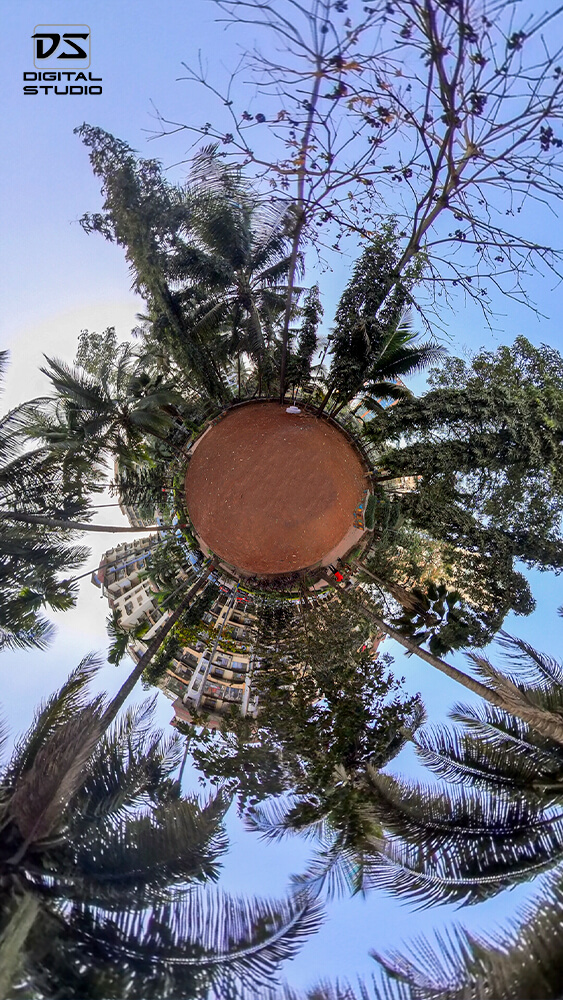
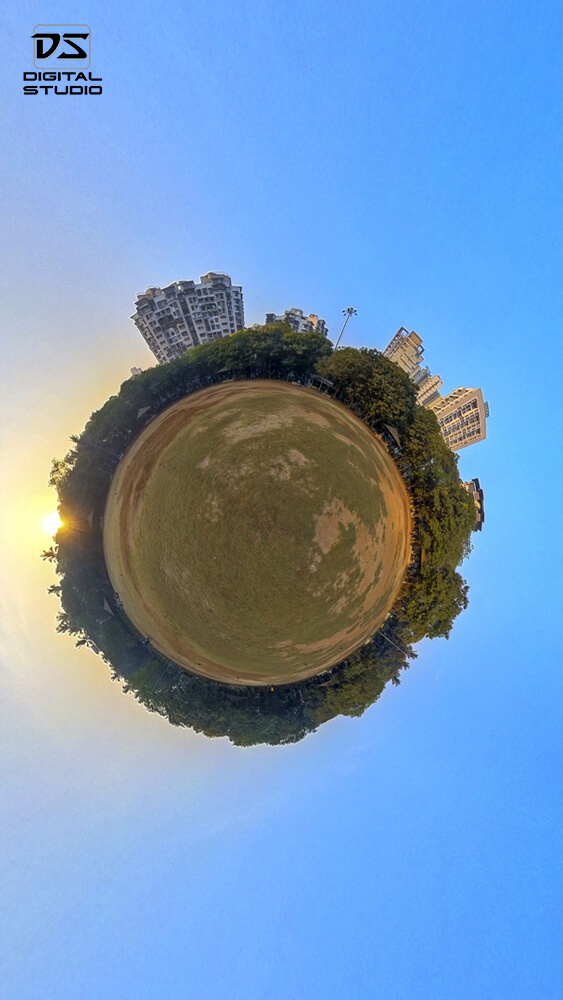
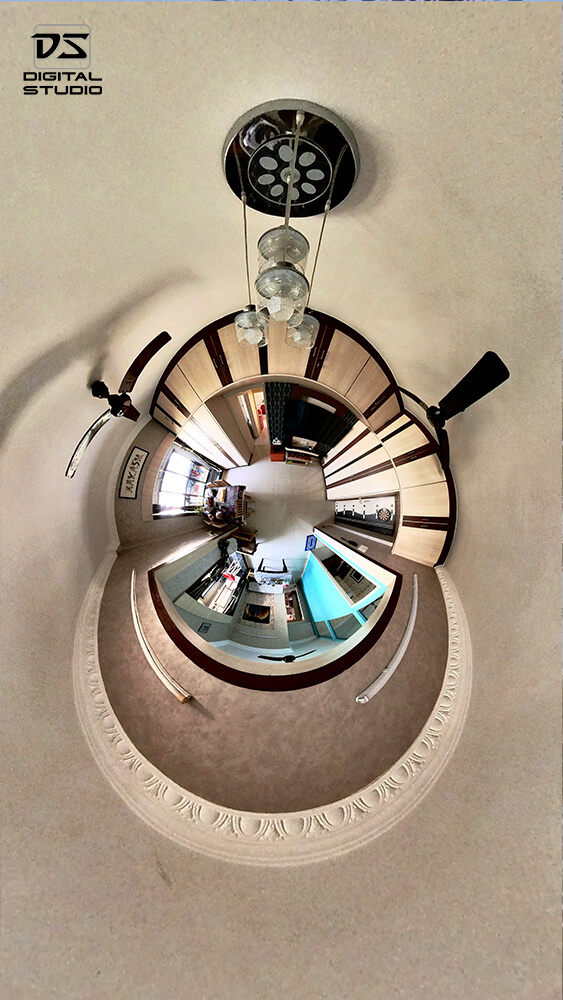
The following examples show 360° photography captured in residential, public, and interior environments. These are included to demonstrate general 360° capture quality and spatial documentation outside industrial and factory use cases.
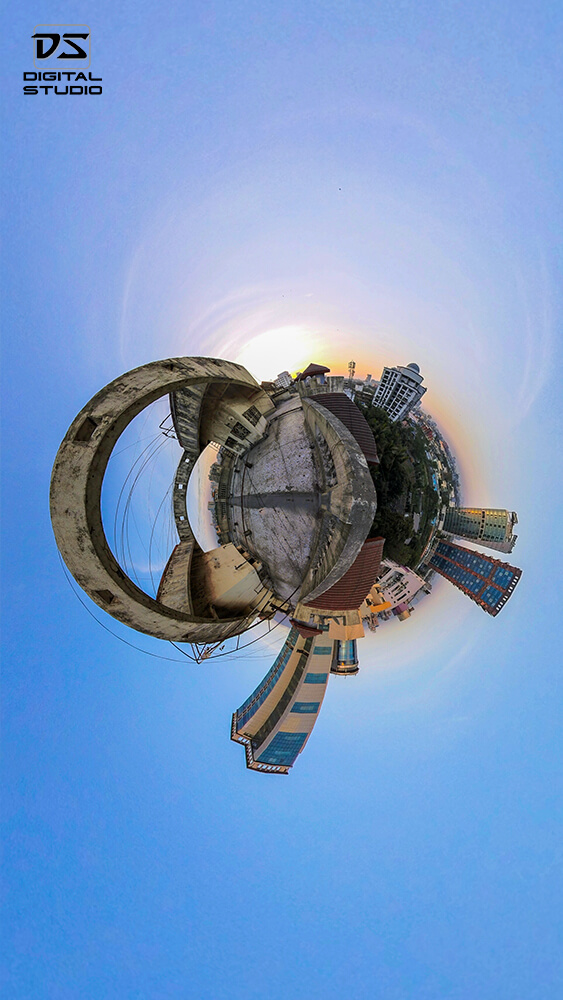
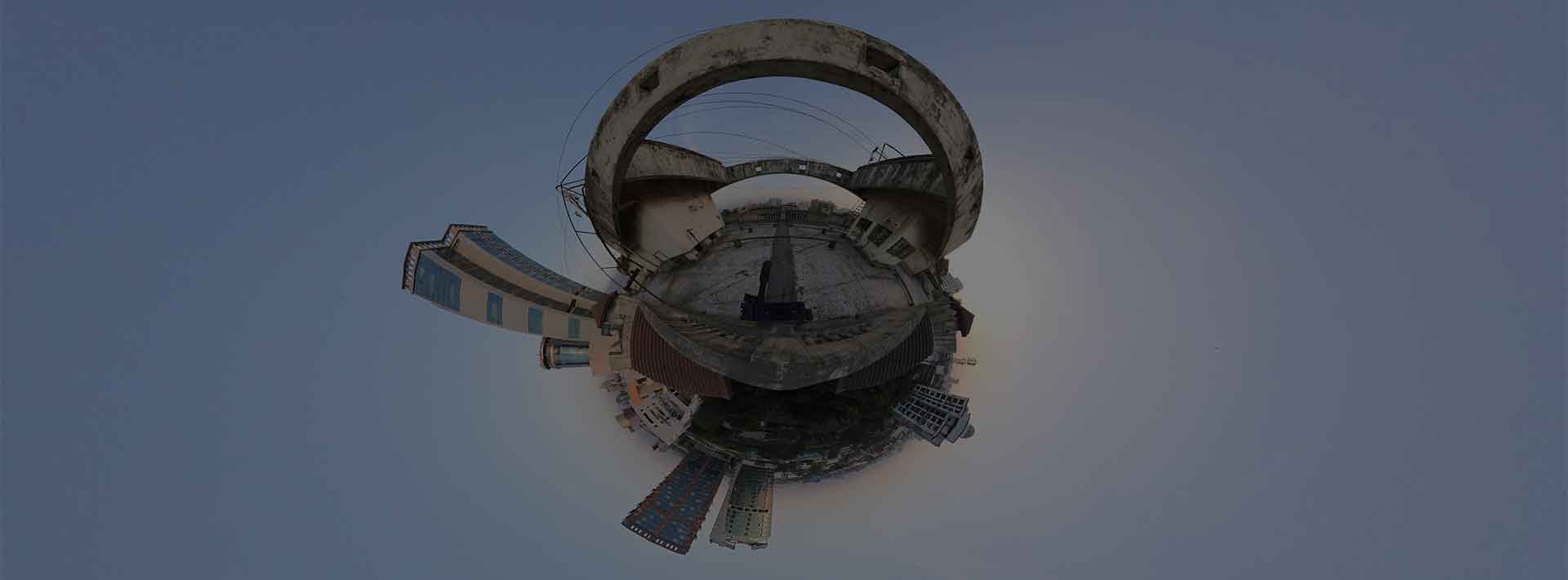
360-degree photograph of a residential building terrace
Residential building terrace captured in 360°

360-degree photograph of an interior living room
Interior living room space documented in 360°

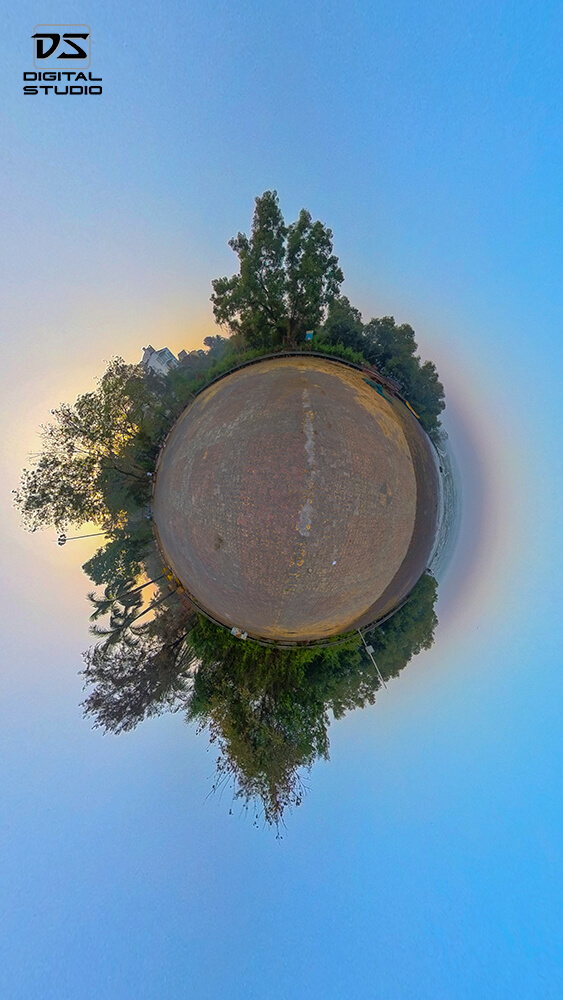
360-degree photograph of a society playground
Society playground recorded using 360° photography

360-degree photograph of Sitaram Master Udyaan, Sanpada
Sitaram Master Udyaan, Sanpada — 360° outdoor view

360-degree panoramic photograph of Sagar Vihar, Vashi
Sagar Vihar, Vashi — 360° panoramic photograph

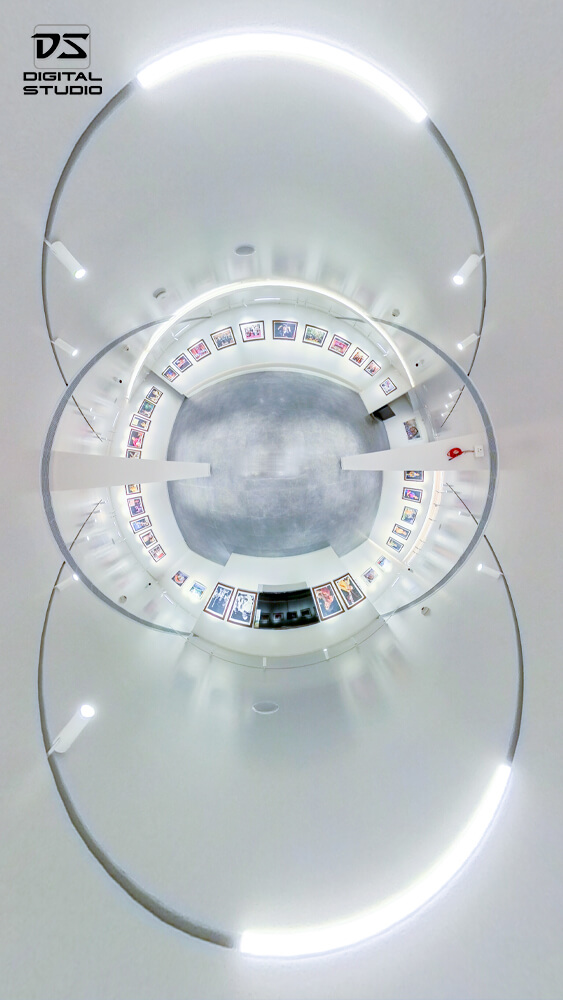
360-degree photograph of an interior art gallery
Interior art gallery space documented in 360°

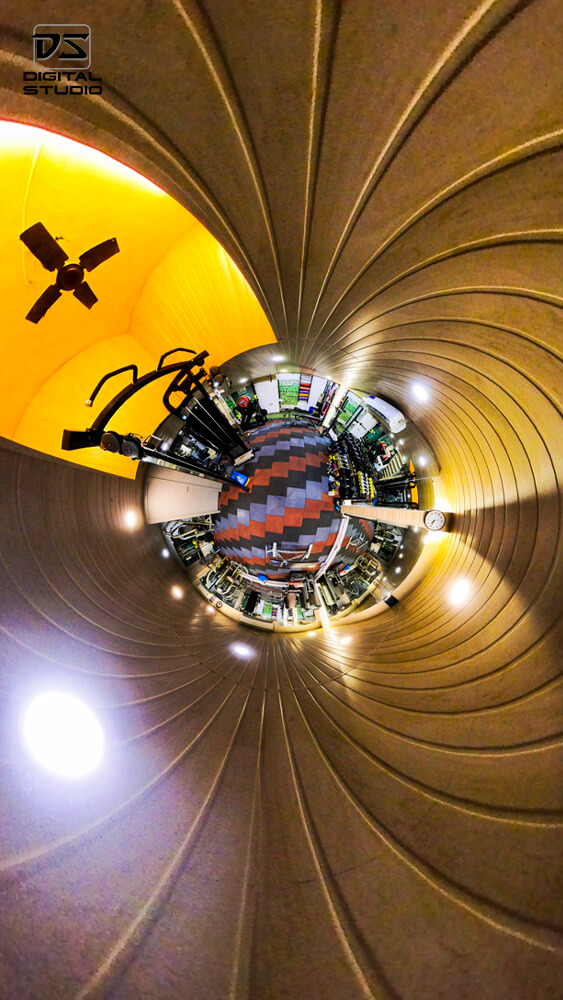
360-degree photograph of an indoor gym facility
Indoor gym facility captured in 360°

Where 360° Video & Photography Are Used »

360° video and photography are applied selectively in scenarios where spatial understanding, layout, and context are more important than guided cinematic framing.

  • Industrial facilities and manufacturing units: Used for factory walkthroughs, installation documentation, internal training, safety orientation, and remote stakeholder reviews—providing more context than conventional ground-level or drone footage.
  • Real estate and built environments: Applied to residential, commercial, and institutional spaces where layout, circulation, and proportions need to be understood remotely. Commonly used for sales support and project documentation.
  • Education and institutional campuses: Used by schools, colleges, and training institutes to create virtual campus tours and orientation material for students, parents, and staff.
  • Corporate facilities and offices: Useful for internal presentations, onboarding material, and multi-location communication where physical access is limited or impractical.
  • Events and exhibitions (business-focused): Applied to conferences, trade shows, and exhibitions where post-event viewing or remote participation is required.
  • Virtual reality delivery: 360° content can be deployed to VR headsets for immersive viewing, particularly in training, simulation, and walkthrough-based applications.

In each case, the format is chosen based on the objective—whether documentation, training, presentation, or remote access—rather than novelty.

Frequently Asked Questions (FAQ) »

What is 360° videography?

It’s a filming method that captures in every direction, allowing viewers to pan and look around on phones, desktops, or VR headsets. It’s ideal for industrial training, and immersive brand VR content.

Where can I publish 360° videos?

You can upload to YouTube and Facebook (360-enabled), embed on your website, or deploy to VR headsets for events, demos, and internal training.

What deliverables will I receive?

Equirectangular masters, platform-ready renders, poster thumbnails, and optional captions/branding. We can also provide basic interactive linking between scenes when needed.

How long does a 360° project usually take?

Typical timelines are 5–10 working days depending on shoot scope, stitching complexity, approvals, and any optional voiceover or music licensing.

Do you operate across India?

Yes. We cover Mumbai, Navi Mumbai, Thane, Pune, Surat, Delhi-NCR, Bengaluru, Hyderabad, Chennai, Ahmedabad, and other cities across India.

What on-site preparations are required?

Please arrange access permissions, safety briefing, area readiness, and (if indoors) brief control of foot traffic and lighting for clean 360° takes.

Can you include spatial audio?

We can capture or design ambisonic/spatial audio where relevant, subject to location acoustics and final platform compatibility.

What usage rights are included?

Standard business usage for web, social, internal presentations, and events is included. Extended broadcast or paid media can be added on request.

How do we start a project?

Share objectives, locations, and timeline. We’ll propose the right package with a clear scope, deliverables, and transparent pricing.

Conclusion »

360° videography and photography are not designed to replace conventional video formats. They are used when spatial accuracy, layout, and viewer-controlled exploration are essential to the objective.

For industrial sites, built environments, training scenarios, and large or complex locations, 360° capture provides a practical way to document and communicate spaces that are otherwise difficult to explain through standard framing.

The effectiveness of this format depends less on novelty and more on correct planning—camera placement, movement control, stitching quality, and delivery formats matched to the intended platform. When applied selectively and executed properly, 360° media becomes a reliable tool for documentation, presentation, and remote access.

Knowledge Base »

The following reference documents provide additional context on applications, workflows, and comparisons related to 360° videography and photography.

Last updated:

WhatsApp Now!