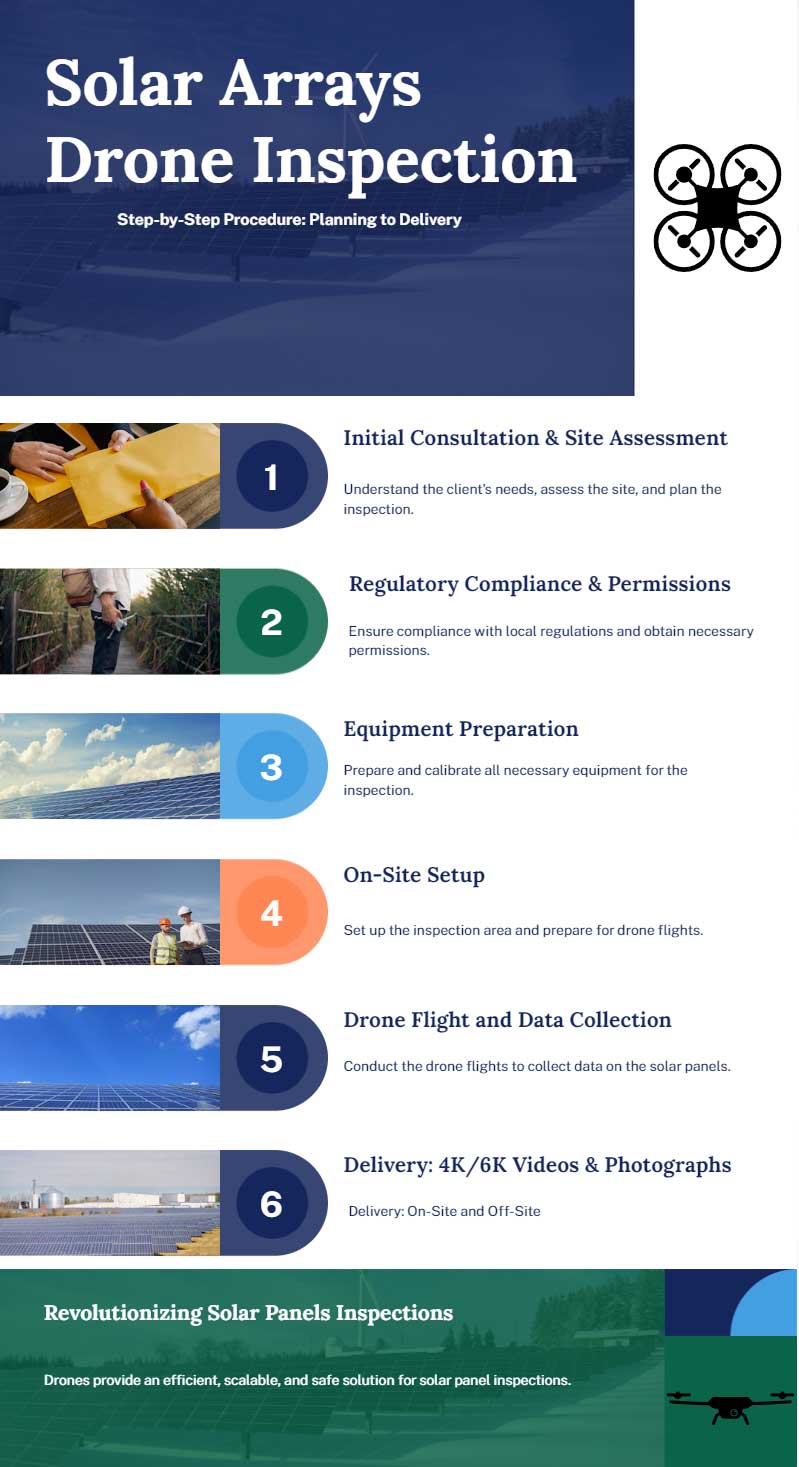
Digital Studio provides professional solar panel drone inspection services across India using thermal (IR) and high-resolution RGB imaging to identify performance-impacting faults in utility-scale and commercial PV installations.
With over 15 years of experience in industrial video↗ and advanced visual documentation, we have executed complex on-site projects for more than 250 international and domestic clients across manufacturing, infrastructure, and energy sectors.
Solar Farms Thermography Fault Detection | Pan-India Services »
Our solar inspection workflows are designed for maintenance teams, EPCs, asset owners, and O&M operators who require actionable insights — not just images. Inspections support fault identification, prioritised maintenance, warranty validation, and performance optimisation.
For solar PV inspections (visual and thermal), we deploy the DJI Matrice 4T↗ (Enterprise Edition) — an industrial-grade platform engineered for aerial diagnostics, thermal analysis, and large-site operations.
Equipped with a radiometric thermal camera and a zoom-capable RGB sensor, the Matrice 4T enables accurate detection of:
Thermal hotspots and module-level failures
Soiling, shading, and mismatch losses
Micro-cracks, diode issues, and delamination
String-level and balance-of-system anomalies
Each inspection results in structured, geo-referenced outputs — including thermal maps, annotated defect logs, and summary reports — to support informed maintenance decisions and reduce downtime.
In a rapidly expanding solar market like India, drone-based inspection offers a safer, faster, and more scalable alternative to manual checks. Our services help stakeholders maintain plant efficiency, extend asset life, and improve return on investment.
Efficiency and Speed: Traditional manual inspections are labor-intensive and time-consuming. Inspectors need to physically access each panel, which can be challenging, especially in large solar farms. Drones can cover vast areas quickly, providing real-time data and high-resolution images for analysis.
Safety: Solar farms are often located in remote areas, and accessing rooftop installations can be risky. Drones eliminate the need for inspectors to climb structures or navigate difficult terrain, reducing the risk of accidents.
Accuracy and Detail: Equipped with high-definition cameras, drones can detect defects invisible to the naked eye. They provide detailed images and data, allowing for precise identification of issues.
Common Defects Detected by Drones »
Cracks and Breakages: Physical damage to solar panels, such as cracks or breakages, can significantly reduce their efficiency. Drones can capture high-resolution images that reveal even the smallest cracks, enabling timely repairs.
Hotspots: Hotspots occur when parts of a solar panel overheat due to various reasons, including shading, dirt accumulation, or internal defects. Thermal imaging sensors on drones can detect these hotspots, which are not visible in regular photographs.
Dirt and Debris Accumulation: Dirt, dust, and bird droppings on solar panels can obstruct sunlight, reducing their efficiency. While this is a common issue, drones can identify specific panels that require cleaning, optimizing maintenance efforts.
Shading Issues: Trees, buildings, or other obstructions casting shadows on solar panels can reduce their output. Drones can map the shading patterns and suggest optimal panel placement or trimming of trees to maximize sunlight exposure.
Electrical Connection Problems: Faulty wiring or poor connections can lead to reduced efficiency or even panel failure. Drones equipped with appropriate sensors can detect irregularities in electrical output, indicating potential connection problems.
Uncommon Defects Detected by Drones »
Delamination: Delamination occurs when layers of a solar panel start to separate, often due to manufacturing defects or environmental factors. This issue is difficult to detect manually but can be identified through high-resolution drone imagery.
Micro-cracks: Micro-cracks are tiny fractures that can occur during manufacturing, transportation, or installation. They can expand over time, leading to significant efficiency losses. Drones with specialized imaging technology can detect these micro-cracks early, allowing for preventive measures.
PID (Potential Induced Degradation): PID is a phenomenon where the performance of solar panels degrades due to high voltage stress. This defect can be challenging to detect without specialized equipment. Drones equipped with advanced diagnostic tools can identify PID, enabling corrective actions.
Bypass Diode Failure: Bypass diodes are used in solar panels to maintain power output in case some cells are shaded or damaged. Failure of these diodes can lead to significant power losses. Drones can detect anomalies in electrical output that may indicate bypass diode failure.
Corrosion and Oxidation: Environmental factors such as humidity and pollution can cause corrosion and oxidation of solar panels and their components. Drones can identify early signs of corrosion, particularly in hard-to-reach areas, facilitating timely maintenance.
Advantages of Drone-Based Inspections »
Cost-Effectiveness: While the initial investment in drone technology may be high, the long-term savings are substantial. Reduced labor costs, minimized downtime, and extended panel life contribute to overall cost savings.
Comprehensive Reporting: Drones provide detailed reports with high-resolution images, thermal maps, and data analytics. These reports offer actionable insights, helping maintenance teams prioritize repairs and optimize performance.
Regular Monitoring: Drones enable regular and frequent inspections without disrupting the operation of solar installations. This continuous monitoring ensures that defects are detected early and addressed promptly.
Environmental Benefits: Efficient solar panel maintenance ensures maximum energy output, contributing to the sustainability goals of solar projects. Drones, being electric, also have a lower environmental impact compared to traditional inspection methods.
Why Us »
At Digital Studio, we pride ourselves on over 15 years of experience and expertise in delivering top-notch drone inspection services across India.
Our long-standing presence in the industry has equipped us with unparalleled knowledge and skills, ensuring that we stay at the forefront of innovation and quality.
Let's Discuss Your Project
Looking for professional services? Connect with our team to discuss your project requirements.
We capture thermal (IR) and RGB imagery to detect hotspots, micro-cracks, PID, soiling, diode issues, and shadowing. You receive a geo-tagged report with thermal maps, defect pins, severity grading, and a concise action plan.
Do you use thermal cameras for PV inspections?
Yes. We deploy radiometric thermal cameras alongside high-resolution RGB sensors. This combination validates anomalies, speeds up root-cause analysis, and reduces false positives.
Are your operations compliant with Indian drone regulations?
We follow applicable DGCA rules and site safety protocols. We coordinate with site teams for safe take-off/landing zones, flight planning, and any permissions required for the location.
What deliverables will we receive?
A structured package: thermal orthomosaic, annotated defect layers, geotagged images/videos, CSV/XLSX fault register (module/string level), and an executive summary PDF with prioritised fixes.
How fast can you cover a solar plant?
Throughput depends on plant layout, weather, and permissions. As a guide, multi-MW sites are typically documented within 1–3 days, with reports delivered after quality checks and processing.
What about weather and time-of-day constraints?
Low-wind, clear-sky conditions with stable irradiance yield the best thermal contrast. We avoid high winds, rain, or extreme haze and typically plan flights during mid-day windows.
What file formats do you provide?
GeoTIFF/JPEG for maps, MP4/MOV for video, JPG/PNG for stills, and CSV/XLSX for defect logs. GIS-ready exports and KML can be supplied on request.
Do you work across India?
Yes. We execute projects pan-India and can mobilise for utility-scale sites as well as rooftop commercial installations.
How is pricing calculated?
Pricing depends on plant size, locations, layout, accessibility, required deliverables, and travel. Share plant capacity and a layout map for a precise quote.
How do we get started?
Call +91 98205 78189 or email via the website. Send plant capacity, location, tentative dates, and any prior IR/RGB data to speed up mobilisation and planning.
Conclusion »
In conclusion, our 18+ years of experience, combined with our relentless pursuit of excellence in training and certification, make Digital Studio the trusted partner for solar panel inspections.
Our skilled operators, equipped with state-of-the-art drones and a deep understanding of the industry, guarantee the highest quality service, helping our clients maximize the performance and longevity of their solar energy systems.
Last updated:
Let's Discuss Your Project
Looking for professional services? Connect with our team to discuss your project requirements.